

Life got very real for my family last month. It’s not entirely my story to tell, so I’m keeping details close, but the context is this: after navigating a divorce and learning to co-parent, things were finally turning a corner when my ex nearly lost his life to a medical crisis.
Since then, I’ve been telling myself a story over and over again: When I have more information, I will feel better. When I know more, my fear brain will calm down.
Except That’s Not How Fear Works
I get more information, and the stories don’t stop. They just morph. As old catastrophes get ruled out, my brain manufactures new ones. I’ve spent an embarrassing amount of time feeding this machine under the guise of preparation and telling myself this is what good moms do. In reality, I’ve been trying to manufacture successful outcomes in a situation where I have no control.
For more videos, subscribe to my YouTube.
When I catch my breath, I see there is nothing to solve right now. The acute crisis is over, and we are in a full-on, wait-and-see kind of situation. My inner fixer needs to take a vacation.
It’s a Deeply Awkward Place to Live
I want support, yet I want everyone to stop asking me about it. I want other perspectives, yet when I get them I feel overwhelmed because the answers aren’t clear and the decisions are still ultimately mine. I want someone to tell me what to do, yet I feel defensive because I want to handle it alone. So, my brain arms up against every hypothetical future, a strategy that takes a lot of emotional capital.
Most of the things I’ve panicked about haven’t happened. Instead, most of the best-case scenarios have. Amid the hard unknowns, ordinary mornings, laughter, and things working themselves out without my intervention still exist. When I let myself stay in those moments instead of scanning the horizon for the next catastrophe, life feels lighter. Brighter, even.
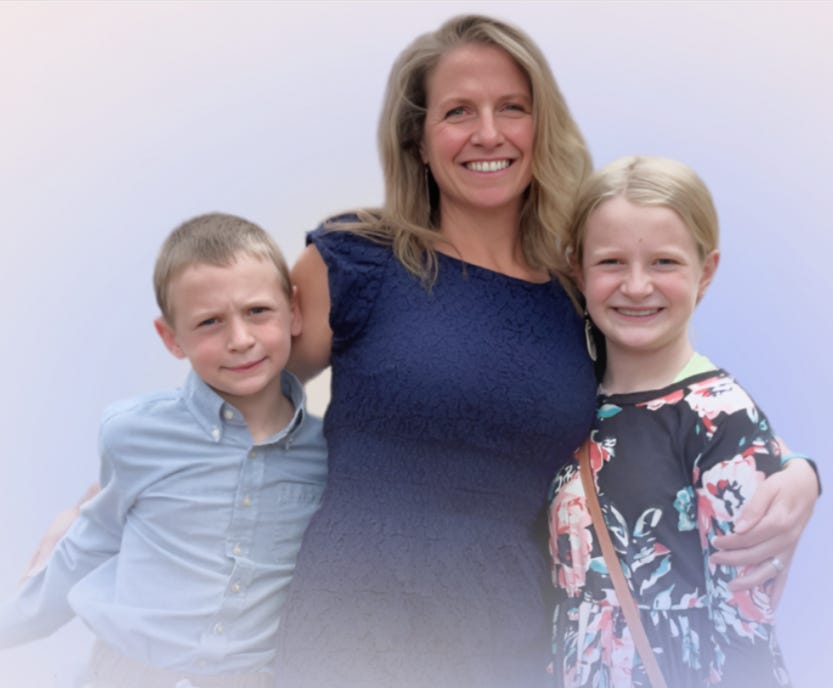
That is resilient optimism. It’s not about forcing toxic positivity or pretending I’m not afraid. It’s the simple practice of noticing when fear has started filling the unknown with stories and loosening my grip on them. Resilient optimism is about connecting to what matters most, and to me, what matters most right now is my children’s well-being.
Someone recently reminded me of something that I know at my core but seem to easily forget: I can choose where I spend my mental energy. If I’m going to spend cognitive capital imagining the future, I’d rather use it thinking about how to make that future bright, whatever comes next. So lately, I’ve been doubling down on four simple questions:
What do I actually know? Not what I’m predicting or afraid of. What are the actual facts?
What am I filling in? Where has fear filled an information gap with the worst-case scenario?
What else could be true? What other possibilities am I missing because fear narrowed my focus?
What is okay right now? What is bright, light, or joyful in this exact moment?
I teach this stuff and am writing a book about it, yet that hasn’t stopped me from spending hours mentally preparing for things that haven’t happened. Resilient optimism was never supposed to make me immune to crisis or make uncertainty comfortable. The practice is about noticing where I am and choosing what to do next.
There Are Two Kinds of Hard Available
There is the hard of staying in the swirl where I scan, predict, and arm myself against every possible outcome, and there is the hard of getting unstuck where I can tolerate the unknown, accept support, and let today be okay without knowing what tomorrow holds.
The hard of getting unstuck simply feels lighter. So that’s the hard I’m choosing today. When fear pulls me back into the swirl tomorrow, I’ll practice choosing it again.