

I met Jerry while working as a reentry specialist at a community-return-to-custody facility (CRCF) in Denver. At the time, my job was to work with parole violators who were sent to a community-based facility instead of being sent back to prison. They had to spend their first 30 days with me, 40 hours a week, working on life skills.
CRCFs were supposed to be a bridge, a last chance for people on parole to stabilize before being sent back to prison. But the system was rigid. Time limits were set, and everyone had to go home once they completed the program, typically to somewhere else in the state where there were fewer opportunities. That was Jerry’s situation.
He was indifferent to the CRCF programming at first, certain that a GED and a job would never be as satisfying as his gang lifestyle. But he made strides. He was eligible to take the GED, a huge feat for someone who initially tested at a sixth-grade level. He got a job at a construction company and was promoted to team lead after only a few weeks. He was making more money than he thought possible.
I saw Jerry come alive. It is one of my favorite looks among those who are justice-involved, the way their body language and speech become more confident after a few small wins. When Jerry told me he didn’t want to go home when his time at the facility ended, I knew the company line was, “nope.” Go home. But Jerry was a special case. He really appeared ready for a change.
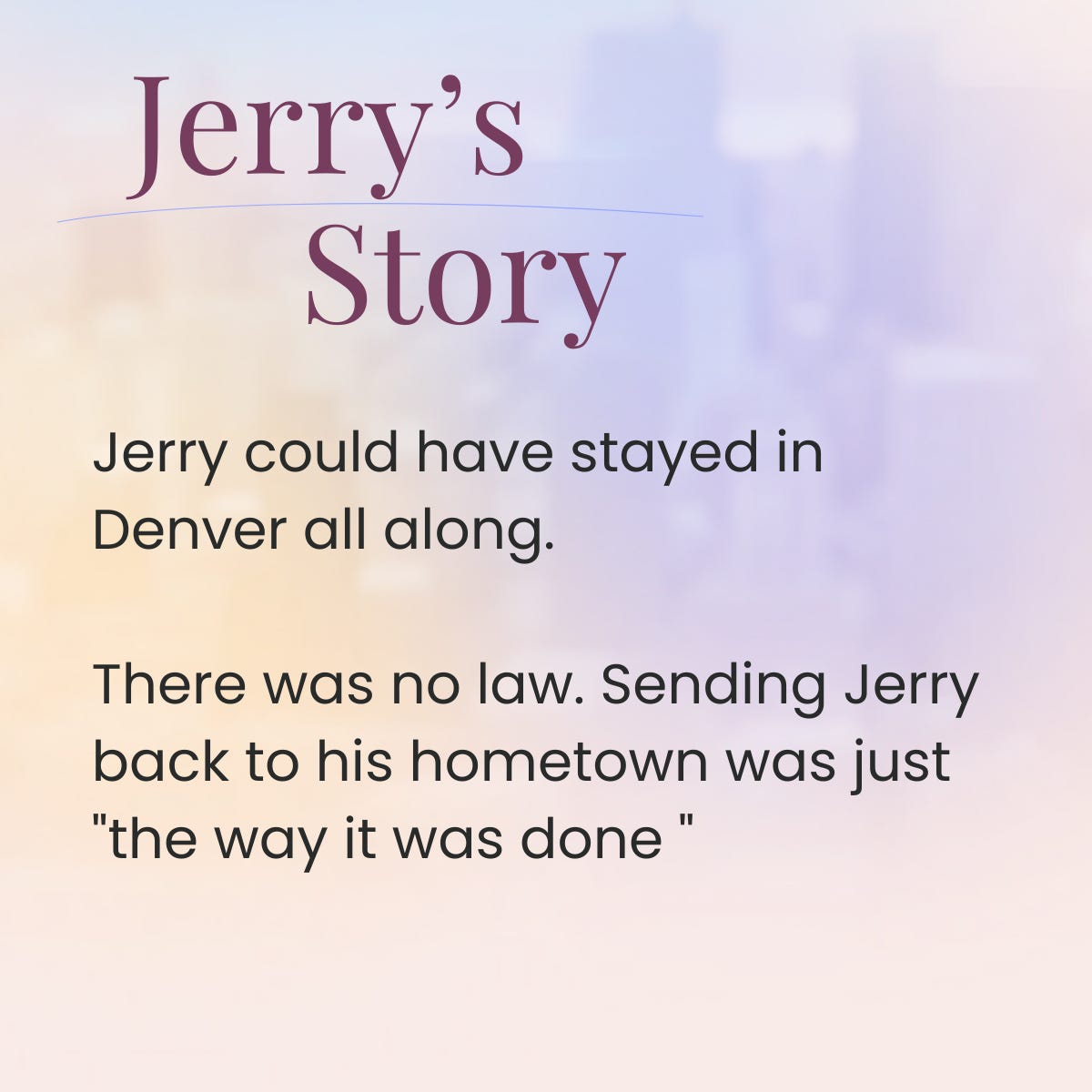
So, together, we made his case with a portfolio of sorts that included letters of recommendation, savings records, and proof of GED progress and employment. He presented it all to his parole officer, who said, “It’s the law to return to where you were paroled from.”
I pleaded with his PO. Then I reached out to his PO’s boss, then my boss, and then anyone else who would listen. They all said “no.” Then Jerry went home.
I looked Jerry up in the computer system to see if he had reported to his new PO. What I read changed everything: Deceased. Gunshot wound. Gang altercation.
I Was EFFD
Jerry’s death broke something in me. I didn’t just grieve for him. I grieved for every person crushed by a system too rigid to recognize people’s humanity. My colleagues used it as proof that I had been manipulated by Jerry, a “gang banger.” One person said that his death was proof that he was lying to me the whole time.
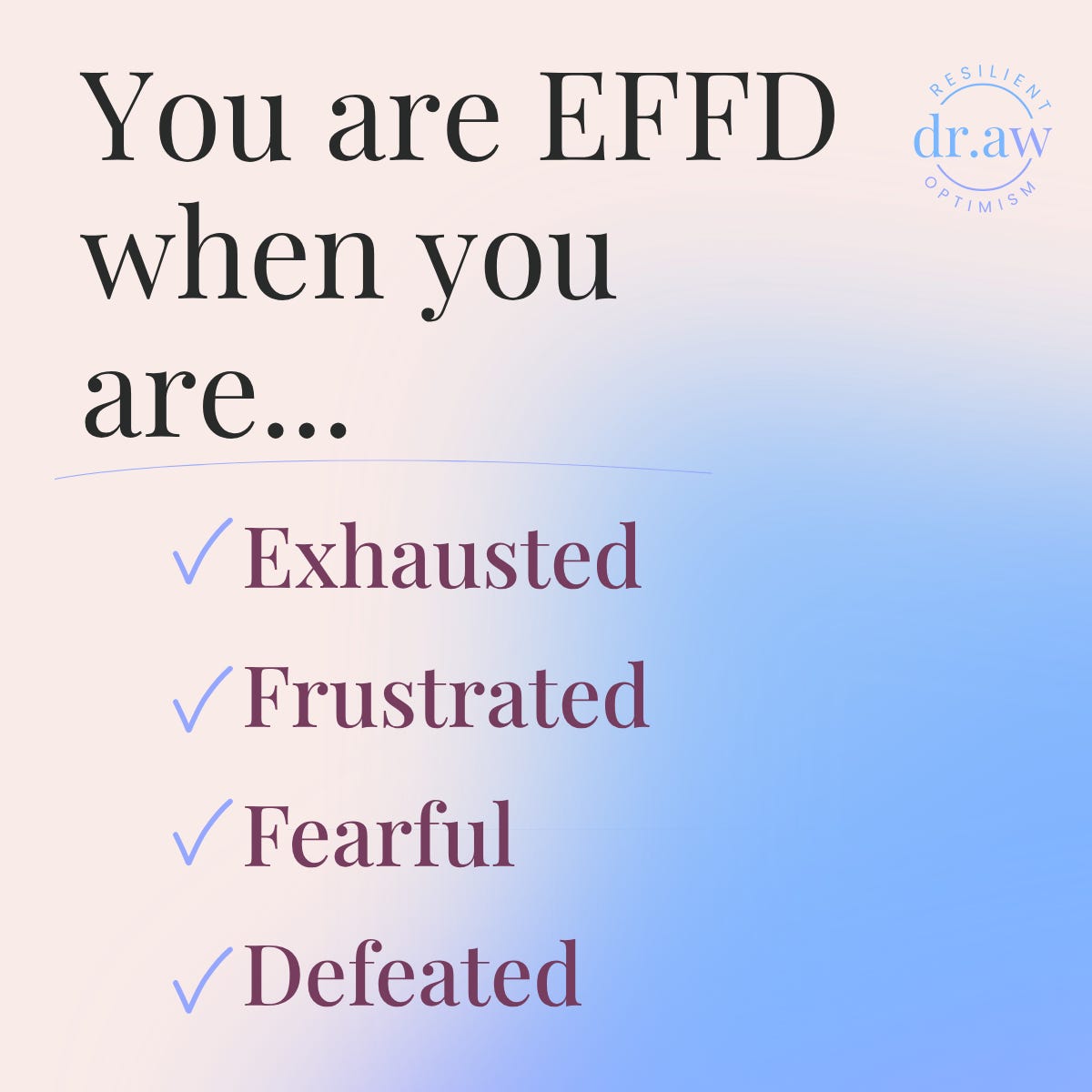
I fell into what I now call an EFFD state:
- Exhausted
- Frustrated
- Fearful
- Defeated
If you’ve ever cared deeply about your work with a student, a patient, a project, a dream, and then something happens that leads you to feel like your efforts don’t matter, you’ve probably been EFFD, too.
For a while, I wanted to quit my job and walk away from work in the criminal/legal system. But with time and the help of my mentor, Gregg, I worked through my EFFDness. I resolved to focus on what I could influence, which was the men walking in the door of the CRCF. Around this time, I also got clearer about my career trajectory. I saw that if I wanted to help more justice-involved people, not just the 40 or so men in my case load, I would need to put myself in a position to influence system-wide changes, maybe even change laws, like the one that required Jerry to return home, which, by the way, turned out not to be a law at all.
I started to build a vision that included me sitting at the decision-making table, and I could see that being EFFD would only cloud my path forward. Without realizing it, I was becoming resiliently optimistic™. I accepted Jerry’s death and committed to keeping his memory alive by sharing his story as often and as loudly as I could. I focused on what I wanted to grow. I looked for opportunities with the help of people who thought differently from me, and I pictured what I wanted for my future. I made a vow that if I had the opportunity to make systemic change, I would take every opportunity.
That led me to develop a keynote talk about resilient optimism and Jerry, then a book, and now a Substack! Thank you for coming with me on this journey.