

Over the past few years, I’ve spent a lot of time talking about resilient optimism™, not as a buzzword or a mindset hack, but as a lived practice that shows up when life is messy and uncertain. What I’ve learned is that resilient optimism doesn’t live in frameworks alone. It lives in people and in the quiet decisions they make behind the scenes. They make these decisions even though giving up would have been easier.
That’s what resilient optimism is about. Doing what you set out to do, even when it’d be easier to give up. Here on my Substack, this space is about sharing those stories. They won’t be polished successes or inspirational soundbites, but rather, honest accounts of what it looks like to keep showing up, imperfectly, courageously, and with care.
Meet Hillary
If you work in the pretrial or community supervision world, chances are you’ve heard her name, and for good reason. Hillary Hartoin has spent more than a decade shaping the criminal justice landscape in Indiana and beyond. She’s served in clerk and court administration, probation, pretrial supervision, community corrections, and grant management.
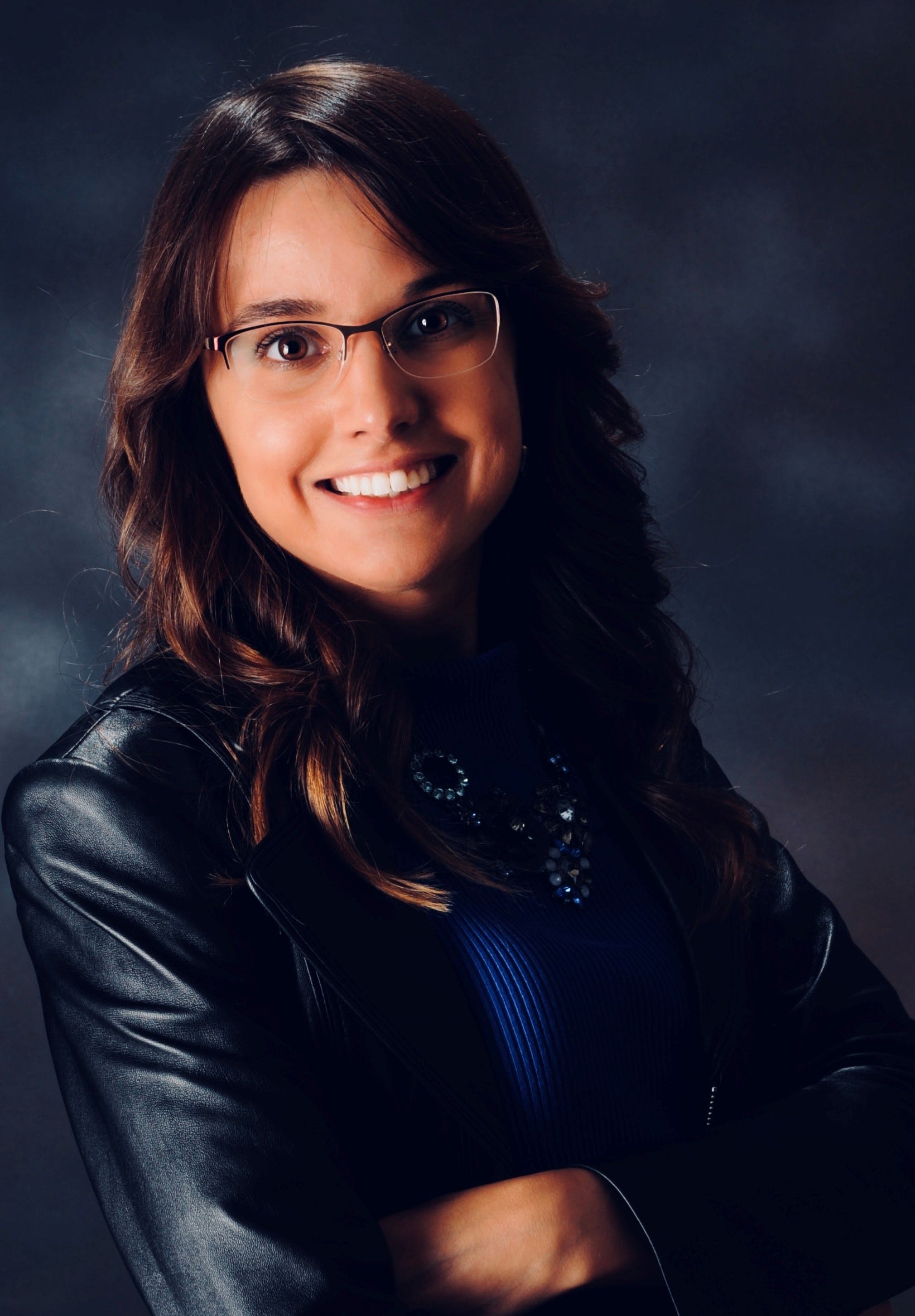
From the outside, Hillary’s life looks like a success story. She is advancing in her career, speaking nationally, and mentoring others. What most people don’t see is the second life she leads.
But Hillary is far more than her résumé. She is a loving friend, devoted dog mom, someone who feels most at home outdoors, an avid reader who devours books and shares what she learns, a giver of knowledge (not a hoarder of it), a developer of people, bringing out their strengths with intention and care, and an innovator who sees possibilities long before others do. She is someone who pours into others, into her staff, into her field, into her community.
And now, she’s doing something that takes a different kind of courage. She’s allowing us into a part of her story she has never before shared publicly. A story about navigating a major medical condition while working in a system that rarely makes space for vulnerability, nuance, or humanity.
I have the honor of helping her to share her story, one that she has not spoken publicly about before. It’s a story about what it is like to live with a challenging medical condition, especially as it becomes something you can no longer hide. I feel that this is a topic we rarely discuss, especially in the criminal justice and human-service worlds.
In these fields, we show up like gladiators, bracing for whatever the day throws at us. What I see again and again is people sidelining their own needs, health, wellbeing, or family responsibilities for the job. We tend to valorize the martyrs. And those who are navigating medical conditions, mental health needs, or caregiving roles often stay silent… and suffer quietly.
So before we begin, I want to ask something of this community. When I share this story, please show up with care, with empathy, and with your absolute best behavior.
I say this because I’ve seen how people don’t always respond in the kindest of ways to things they can’t see and don’t understand. They aren’t always quick to be supportive and accepting, and that makes sharing even scarier.
I know this community is better than that. Let’s model what support can look like.
Let’s listen with an open heart and engage thoughtfully as we explore the unspoken together.
Ableism
I’d like to start by talking about something called Ableism. The Oxford Dictionary defines it as: Discrimination in favor of nondisabled people.
But that definition doesn’t go far enough. Ableism shows up in endless ways, including
Assuming people with medical conditions or disabilities are less capable, less reliable, or have lives that are limited or unhappy.
Designing workplaces, programs, or environments where accessibility isn’t even considered.
Refusing reasonable accommodations or quietly excluding disabled individuals from opportunities, hiring, or advancement.
Leaving people out of social, professional, or training spaces because adapting would be “too hard.”
Using outdated, demeaning, or intrusive language about someone’s body, ability, or health.
Ableism also shows up in friendships:
Accusing people with invisible or fluctuating disabilities of faking symptoms on “good” days.
Avoiding someone because their disability makes you uncomfortable.
Dismissing their stated needs as overreacting or being high-maintenance.
Telling them to “get over it” without acknowledging the grief of chronic illness or disability.
Assuming they’re lazy or unmotivated, not trying hard enough to get better.
As I’ve been learning more about what it’s actually like to navigate a major medical disability (yes, this is considered a disability), I’ve been shocked at how pervasive the language piece is. So many comments, assumptions, and hurtful things are said casually in hallways or meetings.
My hope is that by sharing Hillary’s story with you, you’ll connect with someone who is living this experience right now, and that together we can learn, grow, and build a culture rooted in dignity, understanding, and resilient optimism.
The Physical Reality
Hillary has been living with severe Systemic Lupus Erythematosus (Lupus) and Postural Orthostatic Tachycardia Syndrome (POTS) privately for nearly two decades. Many of the people close to her knew she was dealing with “health issues,” but the truth is far more complex, and far more serious, than even I realized.
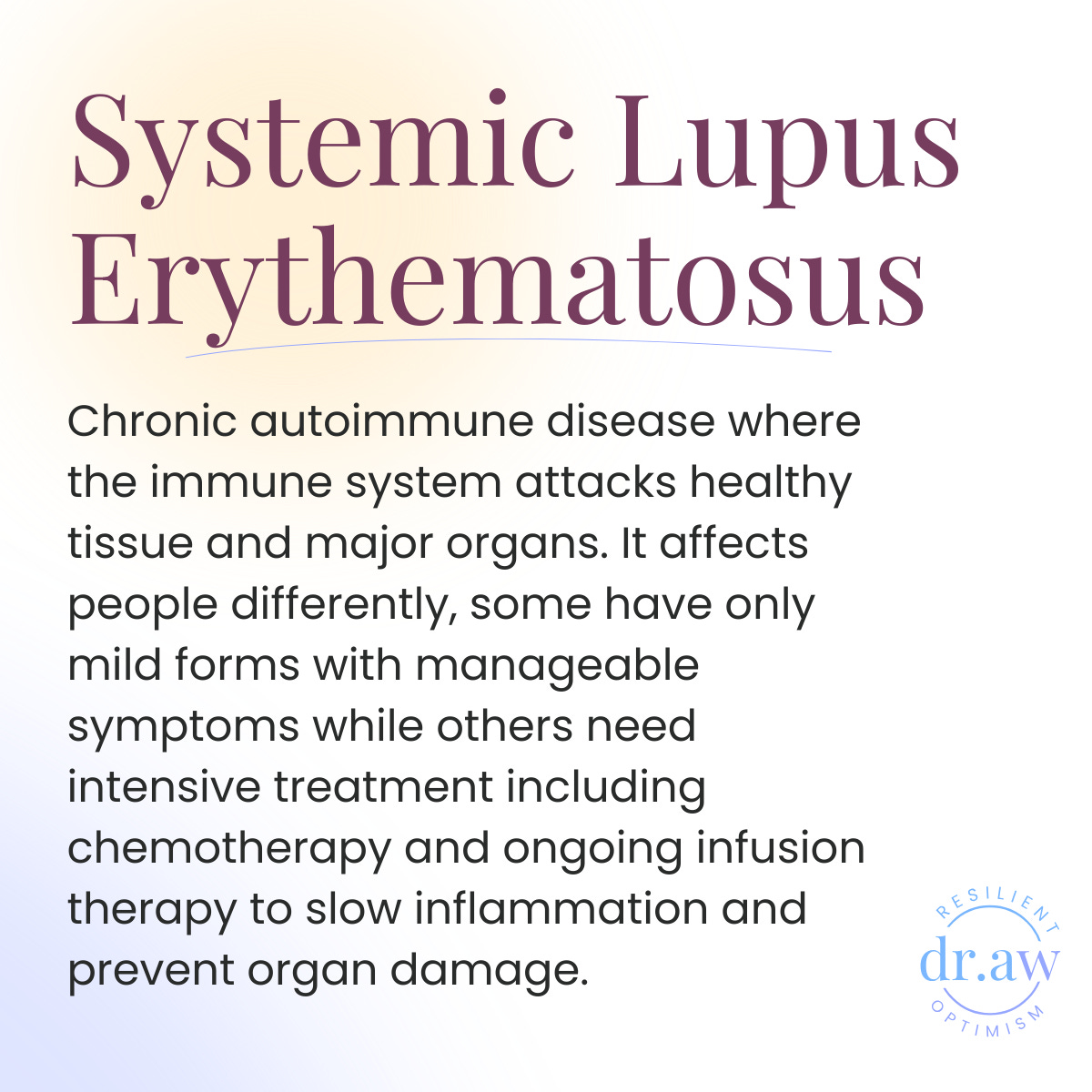
Lupus is a chronic autoimmune disease where the immune system attacks healthy tissue and major organs. While some people experience milder forms, hers has required intensive treatments over the years, including chemotherapy and ongoing infusion therapy to slow inflammation and prevent organ damage.
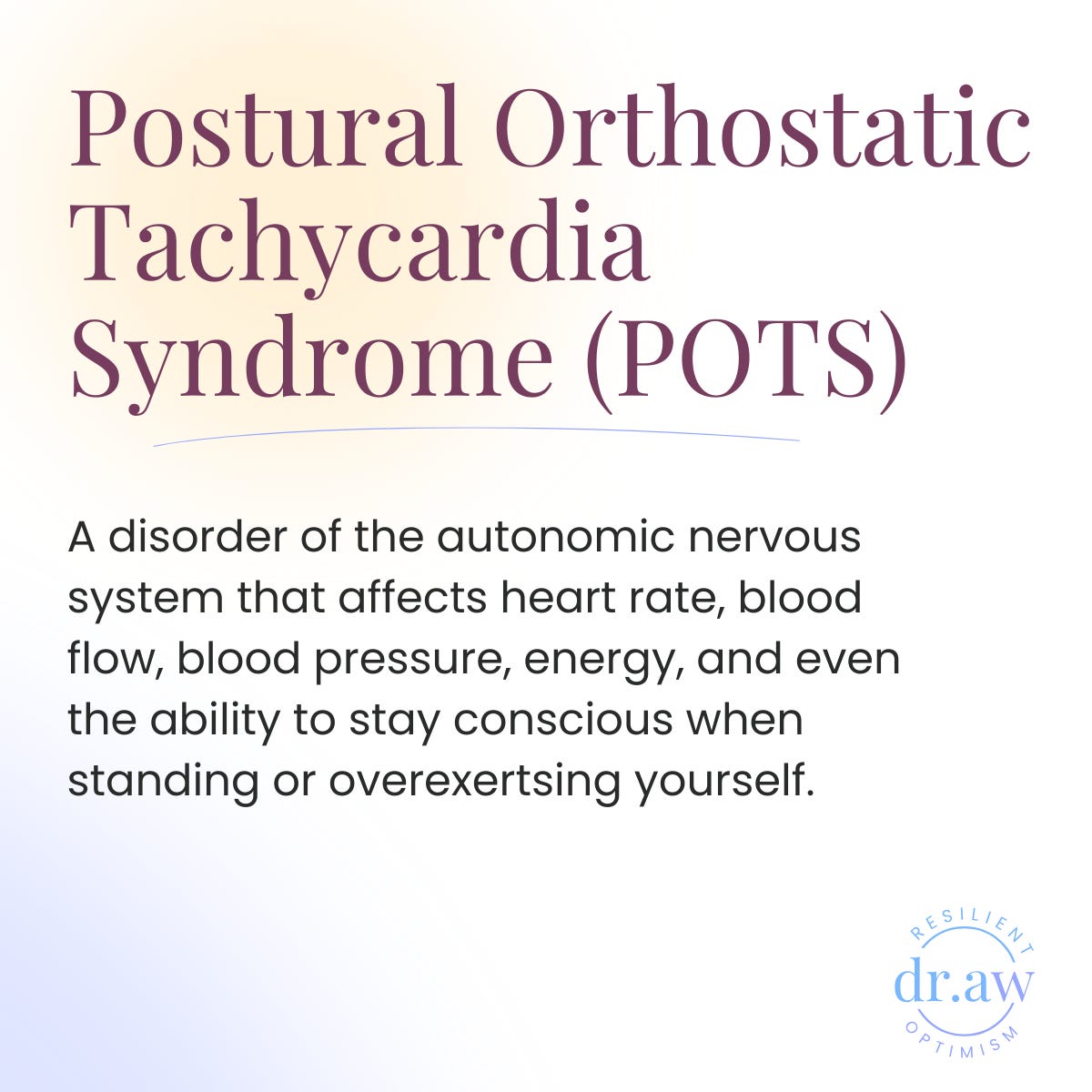
POTS is a disorder of the autonomic nervous system that affects her heart rate, blood flow, blood pressure, energy, and even her ability to stay conscious when she stands or overexerts herself.
Together, these two conditions mean navigating a set of illnesses that have no cure, only management, unpredictability, and lifelong treatment.
So what does her day-to-day look like?
Hillary shared that her symptoms vary, but most days bring crushing fatigue, anemia, pain in her bones and nerves, swollen joints, kidney complications, neuropathy, hair loss, and stomach damage from years of treatment. Managing her weight and getting adequate nutrition is an ongoing fight.
POTS adds another layer with heart palpitations, blood pressure drops, dizziness, and fainting. Even bending down to pet her dog can trigger symptoms.
And, for Hillary, this season has been especially difficult. Her current treatment protocol includes:
multiple four-hour infusions every week
injections every 72 hours
a long list of medications
She told me, Being an overachiever with a chronic illness is brutal. Your ambition doesn’t disappear just because your body slows down. You feel trapped inside a body that can’t keep up with who you are.
After nearly 20 years of fighting illness while building a career, the exhaustion isn’t just physical. It’s bone-deep. It’s the kind that comes from two decades of pushing, working, crashing, recovering, and pushing again.
The turning point came this fall when Hillary made the difficult decision to get a port implanted, which is a visible sign of everything she’s been fighting in silence. It requires at least two infusion center visits every week, and often more. And as her symptoms have become more visible (e.g., tremors, mobility challenges, sometimes needing crutches), hiding simply isn’t an option anymore.
The Emotional and Social Reality
While the physical parts of her illness can be obvious, there are parts that are often hidden beyond what the eyes can see, especially the social and emotional cost of chronic illness, especially in a field that expects strength without softness.
When I asked Hillary how this journey has affected her emotionally, she said,
It’s harder than I ever admit out loud.
She worries about being a burden, even though she is fighting every single day. She manages more than ten infusions a month, injections every 72 hours, a complex medication regimen, and a full-time leadership role. And yet she still wonders whether she’s enough.
But she’s trying to lean into resilient optimism and has learned a few things from that.
She told me she has been surprised to learn that people value her not just for what she does, but for who she is. That her identity, impact, and kindness are not erased by illness, they coexist with it. Chronic illness isn’t your identity, it’s something you live with, not who you are. It doesn’t replace your talents, your passions, or the person you’ve worked hard to become. You carry unique strengths because of what you’ve been through. You’ve built a resilience that most people never have to develop, and empathy that makes you understand others on a deeper level. You’re capable, talented, and powerful in ways your illness could never define. You can still do great things, and nothing about your diagnosis takes that away. It took me years to fully embrace that truth, and some days I still need to be reminded.
She also carries fears people never see:
the fear of being judged
the fear of looking less capable
the fear of being misunderstood
the fear of being dismissed because she looks fine
And that part, the invisibility of chronic illness, is one of the most painful. Hillary told me that People assume if I look fine, I must feel fine. They don’t see the mornings when getting out of bed feels impossible, or the nights when pain keeps me awake, only to turn around and go to work the next day.
She has mastered the art of smiling through discomfort. But invisibility comes with a cost.
What she wishes people knew is simple, but profound. Chronic illness…
Is not an identity
Does not erase capability
Does not diminish talent
Does not define worth
She said, beautifully, You carry unique strengths because of what you’ve been through, resilience most people never have to develop.
And when I asked what support actually looks like, she told me how important it is to walk with her, not try to fix her. She doesn’t need solutions or platitudes, only your presence, compassion, and consistency.
Because the truth is, there is still no cure.
What finally pushed her to start sharing more openly wasn’t a single moment. It was a combination of things. The port, of course, forced visibility. But more importantly, she said new relationships in her life gave her the confidence to believe she could be seen for all of who she is, illness and all.
When the Symptoms Won’t Stay Quiet
For years, Hillary has felt she had to keep this part of her life private, worried that if she shared openly, she might not be taken seriously as a leader. The weight of showing up strong while silently managing symptoms quickly became part of her daily reality.
Here is what Hillary shared with me…
Early in my career, I was fighting invisible battles—undergoing chemotherapy and monthly biologic infusions while forcing myself to look “normal.” I’d work long hours, drive to the infusion center, then return the next day as if nothing had happened.
I hid my illness because vulnerability felt dangerous. I believed strength meant silence and that excelling required pretending everything was fine. On the inside, I was unraveling; on the outside, I made sure no one could tell.
Keeping it secret was exhausting. I was driving in two lanes at once. I feared being pitied, judged, or seen differently at work. Worse, I worried people would not accept this new version of me personally and professionally , so I pushed myself even harder to prove my worth. I told myself I couldn’t have a career if my condition were public. I hadn’t yet realized that my illness didn’t define who I am, and that just because my body’s capabilities were changing, it didn’t mean my skills, talents, or potential were any less.
People often equate strength with pushing through pain, but chronic illness redefines what strength really looks like.With lupus and POTs, ignoring symptoms and pushing through pain can result in days or weeks of recovery, sometimes irreversible damage. But real resilience isn’t about pretending these realities don’t exist. It’s about acknowledging them, working with them, and still finding ways to show up not only for others, but for ourselves.
Her story reminds me of something we don’t talk about enough. The unspoken burdens leaders carry, and how often we feel pressure to “power through” rather than invite support. Lately, Hillary’s symptoms have been getting worse. What was once “manageable in silence” has now demanded her attention in a louder, unavoidable way.
I was sad to learn that Hillary found safety in silence, comfort in keeping things to herself. Here is what she told me:
I’ve come to understand that hiding my condition never kept me safe; it only kept me isolated from the support and love I deserved. The world, and the people in it, are far from perfect, sometimes cruel. Some friendships I thought would last have quietly faded away, while others—though miles apart—have become my greatest sources of strength. I’ve encountered bias I never saw coming, and my circle has grown smaller, but also more real and strong. Yes, it hurts to lose people you care about or to feel sidelined by those who refuse to understand, but I’ve learned that this isn’t a reflection of me or my value—it’s a reflection of their bias. It’s my choice not to adopt their views as my truth about who I am or my capacity to love and care for those around me.
Instead of hiding, she’s learning to lean resilient optimism. She says that looks like:
Focusing her limited energy on what matters most.
Finding new avenues for joy.
Letting others come alongside her and help.
Choosing hope, even when the path feels uncertain.
The truth is, resilient optimism isn’t about toxic positivity or pretending everything is fine. It’s about the courage to reframe, reconnect, and find strength in both resilience and softness.
Strength in Letting Go
When I asked Hillary what she’s learning in this season of her life, she told me: Strength isn’t always about going it alone or pretending everything’s fine. Sometimes, it’s in letting others help carry the weight. Resilient optimism is taking the next step, working toward an unseen future, and valuing authenticity over the persona others expect.
You learn what matters, who matters, what pace works for you, and what expectations you don’t need to carry anymore. Letting go isn’t defeat.
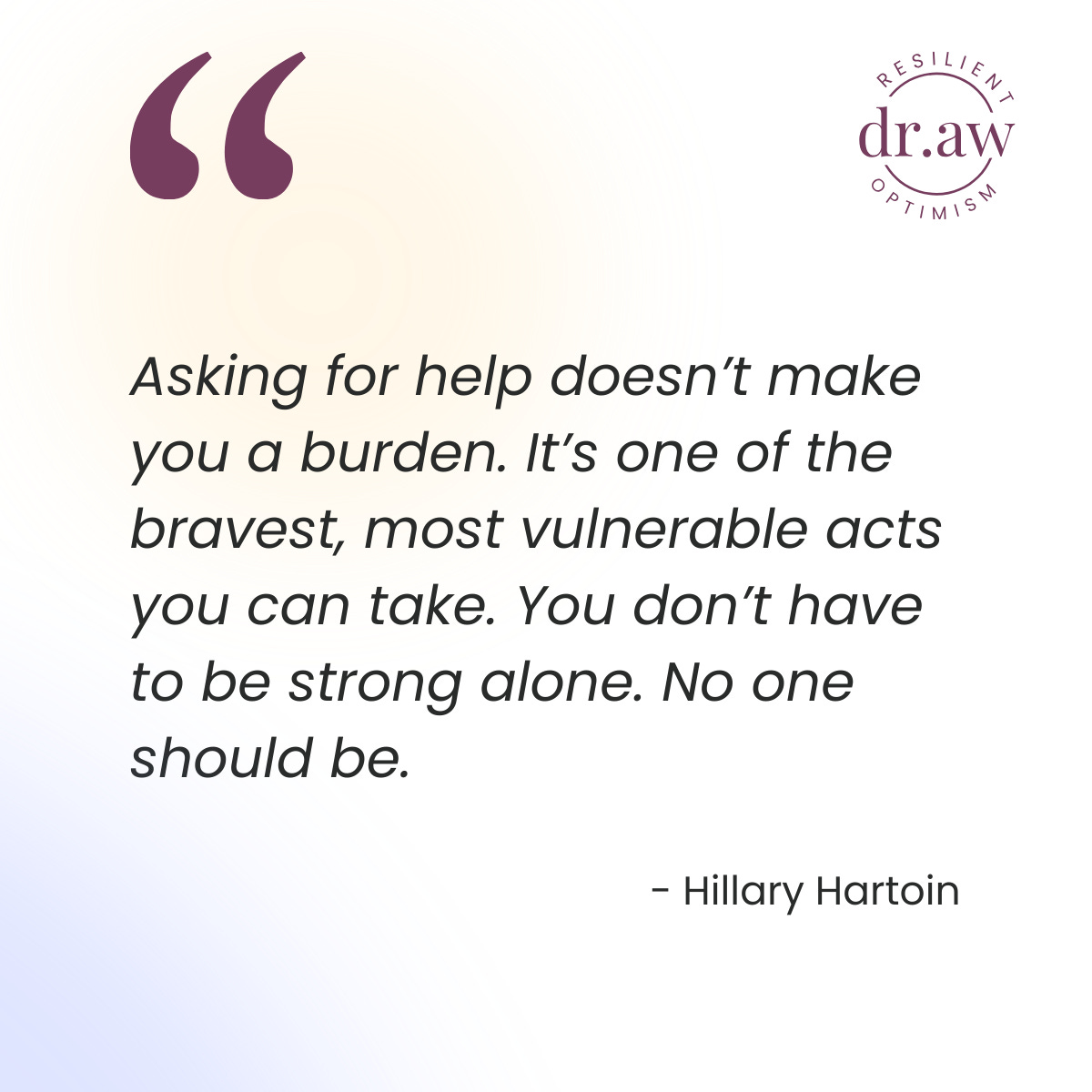
Resilience grows in connection. For many living with chronic illness, sharing our diagnosis and asking for help is terrifying, tied to fears of being seen as “less than” or a “burden”. But keeping struggles to ourselves robs us of the strength and connection that come from facing challenges together. We’re denying others the privilege of loving someone with a grit and grace that is only found in overcoming difficulty. Asking for help doesn’t make you a burden—it’s one of the bravest, most vulnerable acts we can take. You don’t have to be strong alone. No one should be.
Trust and vulnerability have never come easily for me. Some say I’m stubbornly independent. A turning point came when I met someone with remarkable empathy and resilience, someone who saw past my mask and recognized the internal struggles I was facing—a path he had already walked himself. He figured out my secret. What’s extraordinary is that I didn’t have to ask for help; he simply offered it, asking if we could face these challenges together. At that moment, I had a choice: accept his friendship or keep hiding, alone.
Over time, I’ve learned that living with severe lupus and POTs means constantly adapting. It means facing uncertainty with courage you may not even realize you have. It means learning to be gentle with myself in a world that rewards speed and stamina.
My resilience isn’t measured by how much I accomplish. It’s measured by how I continue to show up, imperfectly, bravely, authentically, even on the days my body feels like a storm I can’t control.
Hillary’s journey is a living example of what it means to step into possibility even when life feels heavy. To ground yourself in what matters. To stay hopeful, not in spite of challenges, but through them.

If you’d like to keep learning about living with chronic illness, Hillary recommends the books featured in this image.
Resilient Optimism and Chronic Illness
Hillary showed me that resilient optimism goes beyond your mind. It encompasses your body and spirit, too. There are an estimated 130 million Americans who suffer from multiple chronic conditions like Hillary. My hope is that by sharing stories like Hillary’s, we can build a community of resilient optimism together.
If you suffer from a chronic disease or know someone who does, share this story with them. None of us is alone on the journey. If you’re walking through something hard right now, maybe Hillary’s story can serve as a reminder that you don’t have to carry it alone. Lean on your people, focus your energy, and hold onto hope.
Hillary says, As of today, I no longer hide my diagnosis. I refuse to let it define me. My health journey has shifted, not diminished my spirit. My achievements are a testament to the perspective, resilience, and empathy I’ve gained while navigating this path.
Though the road ahead is still uncertain, I’m embracing it with a hopeful heart. A challenging diagnosis doesn’t mean I’ve hit a dead end; it’s a chance to adapt and innovate.”
Because resilience doesn’t mean never breaking. It means finding the courage to keep shaping what could be, even when life cracks the surface.